
 The project has set three world records in terms of single-unit power, energy storage scale and energy conversion efficiency, with total technological self-reliance for key core equipment and deep underground space utilization products, according to multiple project producers, including China Energy Engineering Corp (CEEC), on Thursday.What is a compressed air energy storage project?A compressed air energy storage (CAES) project in Hubei, China, has come online, with 300MW/1,500MWh of capacity. The 5-hour duration project, called Hubei Yingchang, was built in two years with a total investment of CNY1.95 billion (US$270 million) and uses abandoned salt mines in the Yingcheng area of Hubei, China’s sixth-most populous province.
How can CAES technology contribute to a low-carbon energy grid?The Jintan project exemplifies the potential of CAES technology to contribute to a low-carbon energy grid. By leveraging existing salt caverns for energy storage and integrating innovative designs, the project offers a sustainable solution to the intermittency of renewable energy sources.
How can a quick-start air turbine help a low-carbon energy grid?The quick-start air turbine enables rapid response during peak-shaving operations, improving grid stability. These advancements not only enhance reliability but also position the facility as a model for future CAES projects worldwide. The Jintan project exemplifies the potential of CAES technology to contribute to a low-carbon energy grid.
When is the 2nd Energy Storage Summit Asia?Energy-Storage.news’ publisher Solar Media will host the 2nd Energy Storage Summit Asia, 9-10 July 2024 in Singapore. The event will help give clarity on this nascent, yet quickly growing market, bringing together a community of credible independent generators, policymakers, banks, funds, off-takers and technology provide
The project has set three world records in terms of single-unit power, energy storage scale and energy conversion efficiency, with total technological self-reliance for key core equipment and deep underground space utilization products, according to multiple project producers, including China Energy Engineering Corp (CEEC), on Thursday.What is a compressed air energy storage project?A compressed air energy storage (CAES) project in Hubei, China, has come online, with 300MW/1,500MWh of capacity. The 5-hour duration project, called Hubei Yingchang, was built in two years with a total investment of CNY1.95 billion (US$270 million) and uses abandoned salt mines in the Yingcheng area of Hubei, China’s sixth-most populous province.
How can CAES technology contribute to a low-carbon energy grid?The Jintan project exemplifies the potential of CAES technology to contribute to a low-carbon energy grid. By leveraging existing salt caverns for energy storage and integrating innovative designs, the project offers a sustainable solution to the intermittency of renewable energy sources.
How can a quick-start air turbine help a low-carbon energy grid?The quick-start air turbine enables rapid response during peak-shaving operations, improving grid stability. These advancements not only enhance reliability but also position the facility as a model for future CAES projects worldwide. The Jintan project exemplifies the potential of CAES technology to contribute to a low-carbon energy grid.
When is the 2nd Energy Storage Summit Asia?Energy-Storage.news’ publisher Solar Media will host the 2nd Energy Storage Summit Asia, 9-10 July 2024 in Singapore. The event will help give clarity on this nascent, yet quickly growing market, bringing together a community of credible independent generators, policymakers, banks, funds, off-takers and technology provide
Jan 14, 2025 · The Nengchu-1 project in Yingcheng, Hubei Province, has marked advancement in China''s energy storage capabilities. This facility is the world''s
Sep 15, 2024 · In compressed air energy storages (CAES), electricity is used to compress air to high pressure and store it in a cavern or pressure vessel. During compression, the air is
Jan 10, 2025 · The world''s first 300-megawatt compressed air energy storage (CAES) demonstration project, "Nengchu-1," has achieved full capacity grid connection and begun
May 2, 2013 · Acknowledgments Improving Compressed Air System Performance: A Sourcebook for Industry is a cooperative effort of the U.S. Department of Energy''s Office of Energy
Once completed, the project will hold the title of the world''s largest compressed air energy storage facility, integrating groundbreaking advancements in both power output and efficiency. Phase
Dec 20, 2024 · Phase two of the project will feature two 350 MW non-fuel supplementary CAES units, with a total storage volume of 1.2 million cubic meters. This scale makes it the largest
Nov 30, 2022 · Energy storage (ES) plays a key role in the energy transition to low-carbon economies due to the rising use of intermittent renewable energy in electrical grids. Among the
Jan 10, 2025 · A 300 MW compressed air energy storage (CAES) power station utilizing two underground salt caverns in central China''s Hubei Province was
Dec 26, 2024 · China''s Huaneng Group has launched the second phase of its Jintan Salt Cavern Compressed Air Energy Storage (CAES) project in Changzhou, Jiangsu province, in a new
Aug 15, 2025 · Innovative storage technology could boost renewable energy integration The EU-funded PUSH-CCC project aims to tackle key challenges of compressed air energy storage
Oct 15, 2016 · As an effective approach of implementing power load shifting, fostering the accommodation of renewable energy, such as the wind and solar generation, energy storage
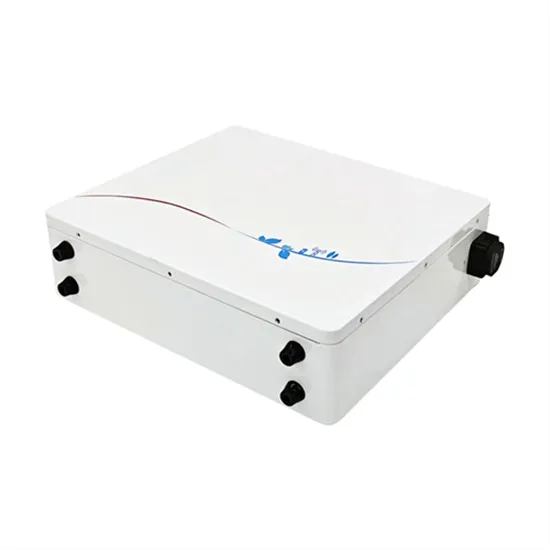
Apr 10, 2024 · A compressed air energy storage (CAES) project in Hubei, China, has come online, with 300MW/1,500MWh of capacity. The 5-hour duration
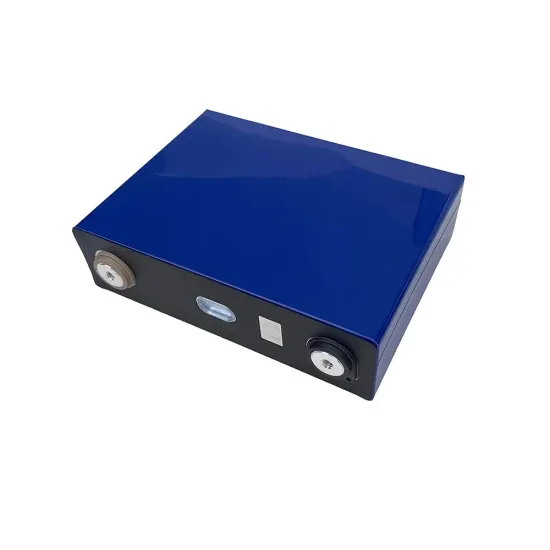
Dec 18, 2024 · The expansion project aims to build two 350 MW non-combustion compressed air energy storage units, with a total volume of 1.2 million cubic meters. Once completed, the
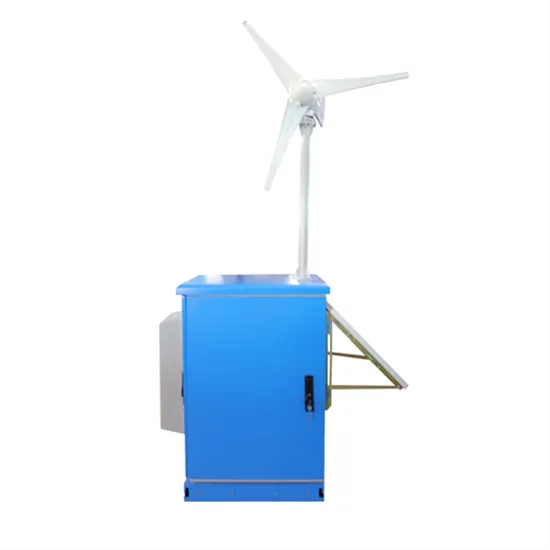
Dec 31, 2024 · Installation work has started on a compressed air energy storage project in Jiangsu, China, claimed to be the largest in the world of its kind.
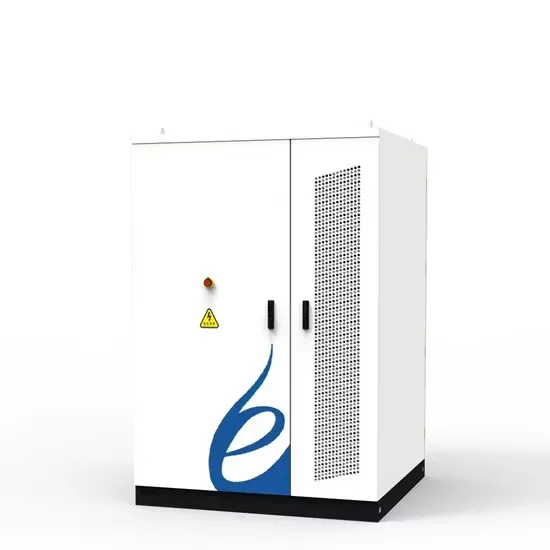
Jan 29, 2023 · As renewable energy production is intermittent, its application creates uncertainty in the level of supply. As a result, integrating an energy
Jan 14, 2025 · A Record-Breaking Innovation in Energy Storage With a capacity of 1,500 MWh and a power output of 300 MW, the Nengchu-1 Compressed Air
Dec 24, 2024 · Designed to operate for 330 charge-discharge cycles annually, the project outpaces existing technologies in both single-unit power generation
May 1, 2025 · The use of compressed air techniques for the storage of energy is discussed in this chapter. This discussion begins with an overview of the basic physics of compressed air
Apr 18, 2024 · The world''s first 300-megawatt compressed air energy storage (CAES) station in Yingcheng, Central China''s Hubei province, was
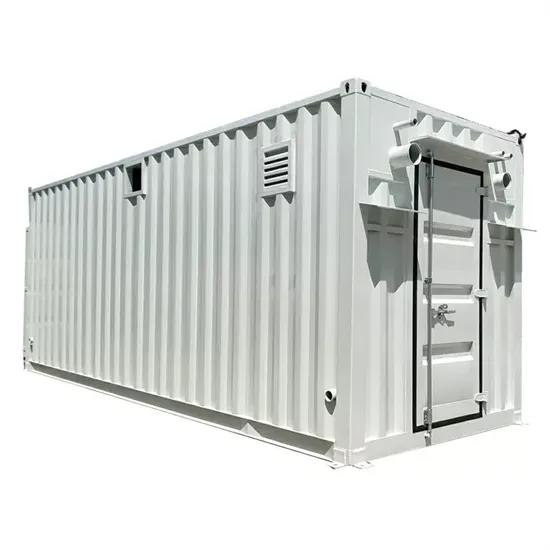
BEIJING, January 14, 2025--The world''s first 300 MW compressed air energy storage (CAES) demonstration project, "Nengchu-1," was fully connected to the grid in Yingcheng, central
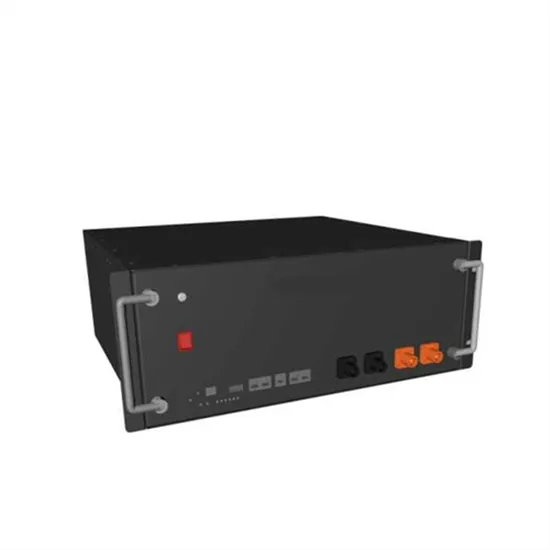
Jan 10, 2025 · The world''s first 300-megawatt compressed air energy storage demonstration project has achieved full capacity grid connection and begun
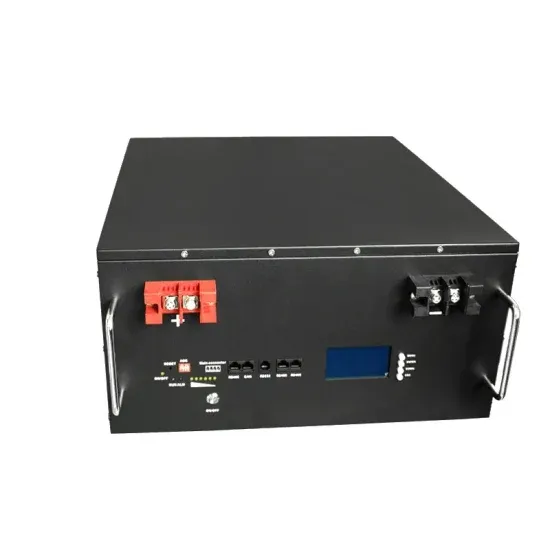
Jan 14, 2025 · With a capacity of 1,500 MWh and a power output of 300 MW, the Nengchu-1 Compressed Air Energy Storage (CAES) plant in China has
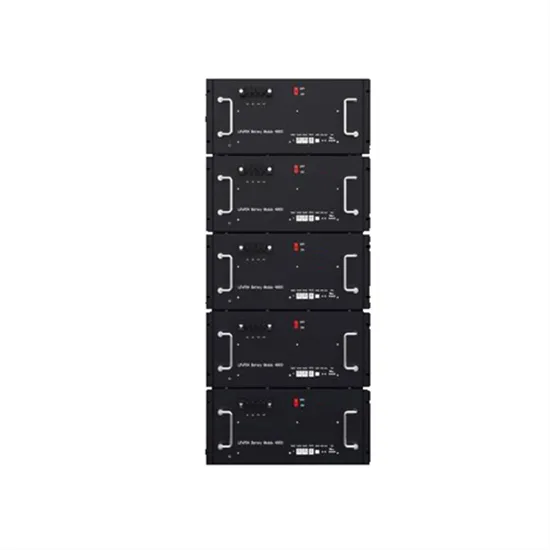
Oct 25, 2022 · The Tai''an 2×300-megawatt compressed air energy storage innovation demonstration project broke ground on Sept 28 in East China''s Shandong Province. It is
Jan 10, 2025 · The world''s first 300 MW compressed air energy storage (CAES) demonstration project, "Nengchu-1," was fully connected to the grid in
Jan 13, 2025 · A compressed air energy storage (CAES) power station utilizing two underground salt caverns in Yingcheng City, central China''s Hubei
Jan 14, 2025 · BEIJING-- (BUSINESS WIRE)--The world''s first 300 MW compressed air energy storage (CAES) demonstration project, "Nengchu-1," was fully connected to the grid in
Oct 1, 2020 · Liquid Air Energy Storage (LAES), also known as cryogenic energy storage, uses excess power to compress and liquefy dried/CO2-free air. When power is needed, the air is
Mar 1, 2024 · Compressed air energy storage (CAES) is an effective solution for balancing this mismatch and therefore is suitable for use in future electrical systems to achieve a high
Dec 20, 2024 · The project will feature two 350 MW non-combustion compressed air energy storage units, with a total storage volume of 1.2 million cubic meters. It will set global
Jan 31, 2025 · 15. Conclusions Compressed Air Energy Storage (CAES) represents a versatile and powerful technology that addresses many of the
Jan 14, 2025 · The world''s first 300 MW compressed air energy storage (CAES) demonstration project, "Nengchu-1," was fully connected to the grid in Yingcheng, central China''s Hubei
Dec 26, 2024 · China''s Huaneng Group has achieved a major milestone in renewable energy innovation with the launch of phase two of its Jintan Salt
Dec 19, 2016 · Abstract and Key Words Compressed Air Energy Storage (CAES) is a hybrid energy storage and generation concept that has many potential benefits especially in a
A compressed air energy storage (CAES) project in Hubei, China, has come online, with 300MW/1,500MWh of capacity. The 5-hour duration project, called Hubei Yingchang, was built in two years with a total investment of CNY1.95 billion (US$270 million) and uses abandoned salt mines in the Yingcheng area of Hubei, China’s sixth-most populous province.
The Jintan project exemplifies the potential of CAES technology to contribute to a low-carbon energy grid. By leveraging existing salt caverns for energy storage and integrating innovative designs, the project offers a sustainable solution to the intermittency of renewable energy sources.
The quick-start air turbine enables rapid response during peak-shaving operations, improving grid stability. These advancements not only enhance reliability but also position the facility as a model for future CAES projects worldwide. The Jintan project exemplifies the potential of CAES technology to contribute to a low-carbon energy grid.
Energy-Storage.news’ publisher Solar Media will host the 2nd Energy Storage Summit Asia, 9-10 July 2024 in Singapore. The event will help give clarity on this nascent, yet quickly growing market, bringing together a community of credible independent generators, policymakers, banks, funds, off-takers and technology providers.
The global commercial and industrial solar energy storage battery market is experiencing unprecedented growth, with demand increasing by over 400% in the past three years. Large-scale battery storage solutions now account for approximately 45% of all new commercial solar installations worldwide. North America leads with 42% market share, driven by corporate sustainability goals and federal investment tax credits that reduce total system costs by 30-35%. Europe follows with 35% market share, where standardized industrial storage designs have cut installation timelines by 60% compared to custom solutions. Asia-Pacific represents the fastest-growing region at 50% CAGR, with manufacturing innovations reducing system prices by 20% annually. Emerging markets are adopting commercial storage for peak shaving and energy cost reduction, with typical payback periods of 3-6 years. Modern industrial installations now feature integrated systems with 50kWh to multi-megawatt capacity at costs below $500/kWh for complete energy solutions.
Technological advancements are dramatically improving solar energy storage battery performance while reducing costs for commercial applications. Next-generation battery management systems maintain optimal performance with 50% less energy loss, extending battery lifespan to 20+ years. Standardized plug-and-play designs have reduced installation costs from $1,000/kW to $550/kW since 2022. Smart integration features now allow industrial systems to operate as virtual power plants, increasing business savings by 40% through time-of-use optimization and grid services. Safety innovations including multi-stage protection and thermal management systems have reduced insurance premiums by 30% for commercial storage installations. New modular designs enable capacity expansion through simple battery additions at just $450/kWh for incremental storage. These innovations have improved ROI significantly, with commercial projects typically achieving payback in 4-7 years depending on local electricity rates and incentive programs. Recent pricing trends show standard industrial systems (50-100kWh) starting at $25,000 and premium systems (200-500kWh) from $100,000, with flexible financing options available for businesses.